
California Spotted Owl & Red Fox: Twilight Watchers
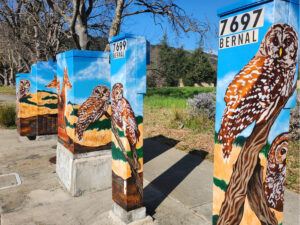 A California Spotted Owl (Strix occidentalis occidentalis) and a Red Fox (Vulpes vulpes) watch as busy Bernal Avenue traffic heads west toward Foothill Boulevard. In times past, lush oak woodlands and creek corridors sheltered these twilight and nocturnal animals, providing abundant hunting opportunities. Today, artist Bianca Nandzik’s striking images bring these creatures to life on sun-drenched utility boxes, part of Pleasanton’s 2015–16 Paint Box Project aimed at beautifying the city and deterring vandalism.
Long before Pleasanton became a town and then a city, the Native American Ohlone peoples were stewards of this land. Sometimes called Costanoan, the Ohlone formed into small “triblets” before European contact. Fifty to sixty triblets spread across the San Francisco Bay Area, the Monterey Bay area, and parts of the inland valleys. People speaking the Pelen and Causen dialects of the regional Ohlone language lived in what later became Pleasanton.
Other triblets, including the Chochenyo, Ramaytush, Rumsien, and Mutsun, also traveled to this region. Their shared stories reveal cultural connections and traditions, including teachings about respecting nature, community cooperation, humility, respect for elders, justice, and fairness. Both the fox and owl appear frequently in these stories, symbolizing cunning, wisdom, and sometimes the role of tricksters who teach important lessons.
The California Spotted Owl is nocturnal and primarily feeds on small mammals such as rodents, squirrels, and rats, occasionally hunting birds, insects, and reptiles. It is listed as a species of concern due to habitat loss from urban development and reduction of old-growth forests. Artist Bianca Nandzik captures the owl’s mottled brown plumage with white spots, which provide excellent camouflage among the trees. Its rounded head tilts as it listens intently, sharp eyes focused, with a 42 to 44-inch wingspan neatly folded against its erect body. Usually a solitary animal, the presence of multiple owls in an area increases the need for careful environmental management.
The Red Fox, however, appears more mischievous. In Native American lore, the coyote and fox are often depicted as clever tricksters, always plotting. German-born artist Bianca Nandzik is keenly aware of the Red Fox’s mischievous nature and offers a fair warning of trouble ahead through her art. Notice the fox’s watchful posture as it scans the open pasture.
The Ohlone peoples hunted the Red Fox for its pelt, particularly valuing the bushy tail for ceremonial adornments. In contrast, the wise owl was revered as a teacher, imparting values of humility, intelligence, and balance. In Native American lore, birds symbolize human traits and remind listeners that survival and harmony come from understanding and honoring these differences.
Bianca Nandzik painted three utility boxes for the City’s Paint Box Project. Alongside the owl and fox, her works Callippe Silverspot and Anise Swallowtail on Poppies: Wings Over Gold and California Tiger Salamander & Red-Legged Frog: Endangered Neighbors demonstrate her devotion to bringing nature directly into the urban streetscape. Adopting the artist identity “ENTROPY,” she embraces the belief that things fall apart and then come together in new forms—a philosophy the owl seems to embody with its wisdom.
Jan Coleman-Knight