Tulancingo Benches
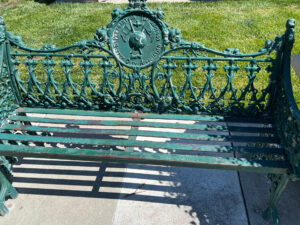 Three handmade green benches, their openwork ornate backs lifted in quiet invitation, rest in front of Pleasanton’s Museum on Main — enduring the summer sun, the soft drizzle of spring, and the chill of winter. They do more than offer a place to rest; they invite connection. Their ornate 1993 ironwork, gentle curves, and traditional green color echo the spirit of the Mexican plaza, where benches are not merely functional, but essential. They are anchoring spaces of belonging. A small sign on Main Street points 2,300 miles south to Tulancingo, yet here at 603 Main Street, that distance feels quietly bridged.
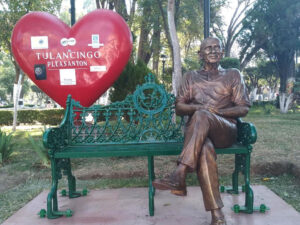
In Tulancingo, a life-sized bronze of Pleasanton’s Bob Athenour,“Señor Bob”, sits casually on a green bench, as if waiting for a companion. Placed in a central public space, the gesture is simple and profound: sit, share, connect. It reflects the spirit of the Sister City relationship he helped begin in 1983, and captures the humility and openness that defined him.
 The exchange between the two cities lives on through sharing. Pleasanton’s gift of a fire engine in the 1990s met the city’s need. Tulancingo’s gifts of hand-painted Talavera-style pottery, embroidered textiles, and folk art share the truth that art is embedded in everyday life. These tokens of pride now rest in a glass room just beyond the hallway leading to the City Council Chambers at 200 Old Bernal Avenue.
On the large back wall of the Pleasanton City Chamber is a vibrant 1985 mural. It was designed by Agustín Vargas and brought to life by Pleasanton artists, including Margene Gerton Hemming Rivara. The story of both cultures unfolds in vibrant color and form, echoing the tradition of great Mexican murals and the shared narrative of two communities.
In both cities, the green benches remain, quietly enduring, holding the space between places. They remind us that distance, when shaped by friendship, is no longer measured in miles apart.
Jan Coleman-Knight